
 See My Latest Article on HelloNation
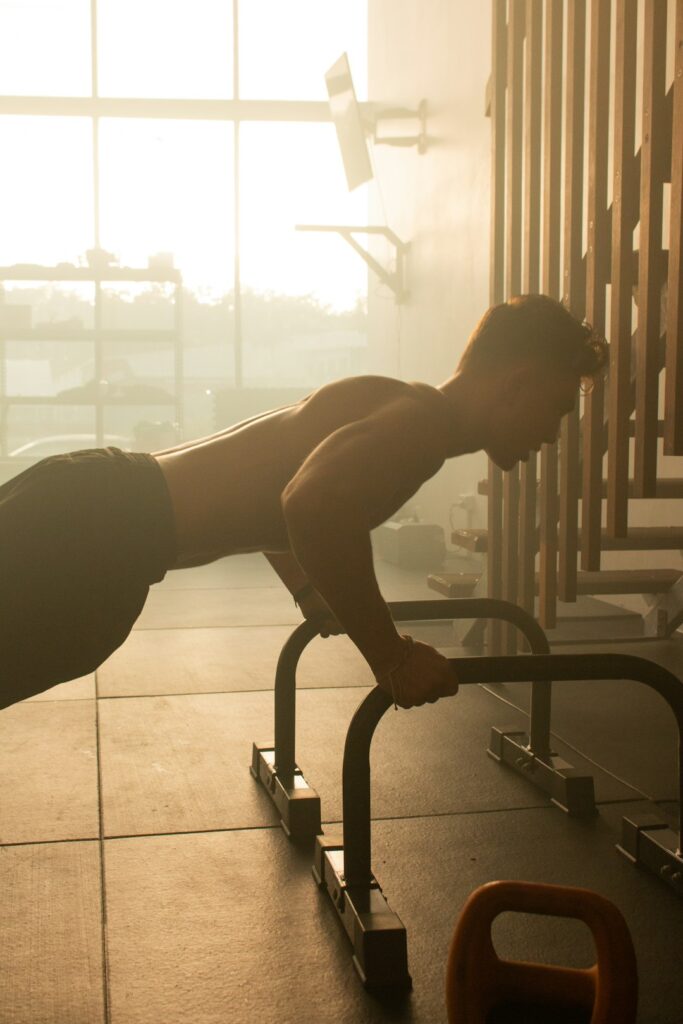
Bodyweight training can build noticeable muscle when exercises are challenging enough, sets are performed close to fatigue, and difficulty increases over time. A gym is not required, but muscle growth does require more than simply repeating comfortable repetitions.
For residents of San Diego, bodyweight workouts can fit well into apartments, garages, patios, shared outdoor spaces, and short home-training sessions. The main challenge is creating enough resistance with limited equipment and maintaining a consistent progression plan.
Can bodyweight exercises build muscle?
Yes. Bodyweight exercises can stimulate muscle growth by placing the muscles under sufficient tension. Exercises such as push-ups, pull-ups, split squats, dips, and single-leg hip bridges can become demanding enough to support hypertrophy, especially for beginners and intermediate trainees.
Muscle growth is influenced by several factors:
- The exercise must challenge the target muscles.
- The final repetitions should feel difficult while maintaining sound technique.
- Training volume must be high enough across the week.
- The body needs adequate protein, calories, sleep, and recovery.
- The exercise must gradually become harder.
A set of 30 easy squats is unlikely to produce the same stimulus as a set of controlled single-leg squats that makes the legs work near their limit. The goal is not simply to accumulate repetitions. The goal is to create progressive mechanical tension.
Which bodyweight exercises are most effective?
The most useful exercises are those that can be adjusted through body position, range of motion, tempo, leverage, or added external resistance.
Push-ups for the chest, shoulders, and triceps
Push-ups are a practical foundation for upper-body training. They work the chest, front shoulders, and triceps while also requiring the trunk to remain stable.
To make them more effective:
- Lower the body under control for two to four seconds.
- Pause briefly near the bottom.
- Keep the ribs and hips aligned rather than letting the lower back sag.
- Progress from standard push-ups to feet-elevated, close-grip, archer, or pseudo-planche variations.
A push-up becomes more challenging when more body weight shifts toward the hands. This makes advanced variations useful when standard repetitions become too easy.
Pull-ups and chin-ups for the back and arms
Pull-ups and chin-ups provide some of the strongest bodyweight options for the upper back, biceps, and forearms. Chin-ups generally allow more assistance from the biceps, while pull-ups may place greater emphasis on the upper back and require more shoulder control.
If a full repetition is not yet possible, useful progressions include:
- Dead hangs for grip and shoulder tolerance
- Scapular pull-ups
- Foot-assisted repetitions
- Slow negative repetitions
- Partial-range pull-ups
A stable bar is essential. Improvised equipment such as weak door fixtures, unstable furniture, or objects not designed to support body weight can create unnecessary injury risk.
Squats and split squats for the lower body
Standard squats are useful for learning movement control, but they may eventually become too easy for muscle growth. Split squats, reverse lunges, and Bulgarian split squats place more demand on each leg and usually provide a stronger training stimulus without requiring heavy weights.
Helpful progressions include:
- Slow-tempo squats
- Pause squats
- Reverse lunges
- Rear-foot-elevated split squats
- Assisted single-leg squats
- Full single-leg squats for experienced trainees
Single-leg exercises also expose differences in balance, hip control, and strength between sides. Perform the weaker side first and match the repetitions on the stronger side.
Glute bridges and single-leg hip exercises
Glute bridges and hip thrust variations train the glutes and can be performed on a floor or stable elevated surface. Beginners may start with two-leg bridges, then progress to single-leg bridges, long-lever bridges, and elevated hip thrusts.
Squeeze the glutes at the top without excessively arching the lower back. If the hamstrings cramp, move the feet slightly closer to or farther from the hips and focus on keeping the pelvis controlled.
Pike push-ups for the shoulders
Pike push-ups shift more of the workload toward the shoulders than standard push-ups. They are a practical progression toward more demanding overhead pressing movements.
Keep the hips raised, lower the head toward the floor in front of the hands, and maintain a controlled range of motion. A gradual progression can move from hands-elevated pike push-ups to floor pike push-ups and eventually to wall-assisted handstand pressing for advanced trainees.
Core exercises that support muscle growth
Core training is not limited to high-repetition abdominal exercises. Movements that resist extension, rotation, or side bending can build useful trunk strength.
Effective choices include:
- Hollow-body holds
- Reverse crunches
- Hanging knee raises
- Side planks
- Slow mountain climbers
- Body saws
- Dead bugs
Use controlled movement rather than allowing the hips or lower back to compensate. Core exercises should support whole-body training rather than leaving the trunk fatigued before demanding leg or upper-body work.
How should bodyweight workouts be organized?
A simple full-body routine performed three days per week works well for many people. Leave at least one day between demanding sessions when possible.

A sample workout could include:
- Push-ups: 3 sets of 6–20 repetitions
- Pull-ups or assisted pull-ups: 3 sets of 4–12 repetitions
- Split squats: 3 sets of 8–15 repetitions per leg
- Single-leg glute bridges: 3 sets of 10–20 repetitions per side
- Pike push-ups: 2–4 sets of 6–15 repetitions
- Hollow-body holds: 3 sets of 20–40 seconds
The repetition ranges are starting points rather than strict rules. Stop a set when technique begins to deteriorate or when only one or two clean repetitions remain possible. Rest approximately two to three minutes between demanding sets and less time for easier core movements.
How can someone progress without weights?
Progression can come from several changes, not only from adding equipment:
- Increase repetitions while staying within a controlled range.
- Use a harder variation.
- Slow the lowering phase.
- Add a pause at the most difficult point.
- Increase the range of motion.
- Reduce assistance from the arms or legs.
- Add a set.
- Reduce rest slightly after strength and technique are established.
For example, a person might progress from incline push-ups to standard push-ups, then to feet-elevated push-ups. A split squat might progress to a rear-foot-elevated version and later to a controlled single-leg squat.
A light backpack can also add resistance, but it should be packed securely and introduced gradually. Avoid placing unstable or sharp objects inside it, and stop if the load changes posture or causes joint discomfort.
How often should each muscle be trained?
Most people can train each major muscle group two or three times per week. Beginners may grow with fewer hard sets because nearly any structured resistance is a new stimulus. More experienced trainees usually need harder exercise variations, additional sets, or carefully selected equipment to continue progressing.
Recovery matters. Persistent soreness, declining performance, poor sleep, unusual fatigue, or joint pain can indicate that training volume or intensity is too high. Warm San Diego weather can also increase fluid loss during outdoor sessions, particularly in direct sun. Training during cooler parts of the day, using shade, and drinking fluids can make outdoor workouts more comfortable.
What mistakes limit muscle growth?
Several common habits make bodyweight workouts less effective:
- Repeating the same easy variation for months
- Treating speed and momentum as proof of intensity
- Using partial repetitions without a clear reason
- Training only the muscles visible in a mirror
- Ignoring pulling movements because they require more setup
- Changing the routine before allowing time for progress
- Failing to eat enough protein and overall food
- Training through sharp or worsening pain
Muscle fatigue is expected. Sharp pain, instability, numbness, or pain that changes normal movement is not a normal requirement of effective training. Modify the exercise, reduce the range of motion, or stop the movement if those symptoms appear.
What supports muscle growth outside the workout?
Nutrition and sleep influence how well the body adapts. Include a protein source in regular meals, eat enough total food to support activity, and prioritize consistent sleep. Protein-rich options can include eggs, dairy foods, fish, poultry, beans, lentils, tofu, and other foods that fit personal dietary needs.
Progress should be measured over several weeks rather than from one workout. Track repetitions, exercise variations, rest periods, and how difficult each set feels. If the same movement becomes easier while technique remains strong, it is usually time to increase the challenge.
A well-planned bodyweight program can build muscle in a small home space or outdoor setting. The most important elements are progressive difficulty, controlled repetitions, balanced movement selection, and enough recovery to allow adaptation.