
 See My Latest Article on HelloNation
What should a beginner know before starting bodybuilding?
Bodybuilding for beginners is mainly a process of building consistent habits: resistance training, adequate food, sleep, and gradual progression. The goal is not to lift as much as possible immediately. It is to learn reliable movement patterns, train major muscle groups regularly, and give the body enough time to adapt.
A beginner does not need an advanced split routine, a large collection of supplements, or an extreme diet. A simple plan performed consistently for several months usually produces better results than a complicated plan followed only occasionally.
Before beginning, consider current injuries, medical conditions, blood pressure concerns, or a long period of inactivity. Moderate exercise is appropriate for many adults, but anyone with significant health concerns should obtain individualized medical guidance before starting strenuous training.
How often should a beginner lift weights?
Most beginners can make steady progress by resistance training two to four days per week. Three nonconsecutive sessions often provide a practical balance between training and recovery.
A full-body routine is usually easier to manage than training one muscle group per day. Each session can include:
- A squat or leg-press movement
- A hip-hinge movement, such as a deadlift variation
- A horizontal push, such as a push-up or chest press
- A horizontal pull, such as a cable or dumbbell row
- A vertical push or pull, such as an overhead press or pulldown
- A simple abdominal or core exercise
Two or three working sets per exercise are enough for many new lifters. A common starting range is approximately 8 to 12 controlled repetitions, although some exercises work well with fewer or more repetitions.
Leave at least one day between demanding full-body sessions. Recovery is part of the training process, not time that has been wasted.
How heavy should the weights be?
Choose a weight that allows controlled technique while leaving roughly two or three good repetitions in reserve at the end of a set. The final repetitions should feel challenging, but the body should not need to twist, bounce, or use momentum to complete them.
For example, if a person can perform 12 repetitions with stable form but could probably complete 14 or 15, the weight is likely appropriate. If the first few repetitions already cause loss of control, reduce the load.
A useful progression method is to stay within a repetition range. If the target is 8 to 12 repetitions, gradually add repetitions while maintaining form. Once all sets reach the upper end of the range, increase the weight by a small amount and begin again near the lower end.
Keep a simple training record that includes:
- Exercise name
- Weight used
- Repetitions completed
- Number of sets
- Notes about discomfort, fatigue, or technique
This record makes progress easier to measure than appearance alone.
What exercises should beginners avoid?
Beginners do not need to avoid particular exercises simply because they are popular or advanced. The better question is whether an exercise matches current mobility, coordination, strength, and training experience.
Exercises deserve caution when they cause sharp pain, repeated joint discomfort, numbness, unusual weakness, or a loss of control. Muscle fatigue and mild effort are normal; sudden or worsening pain is not.
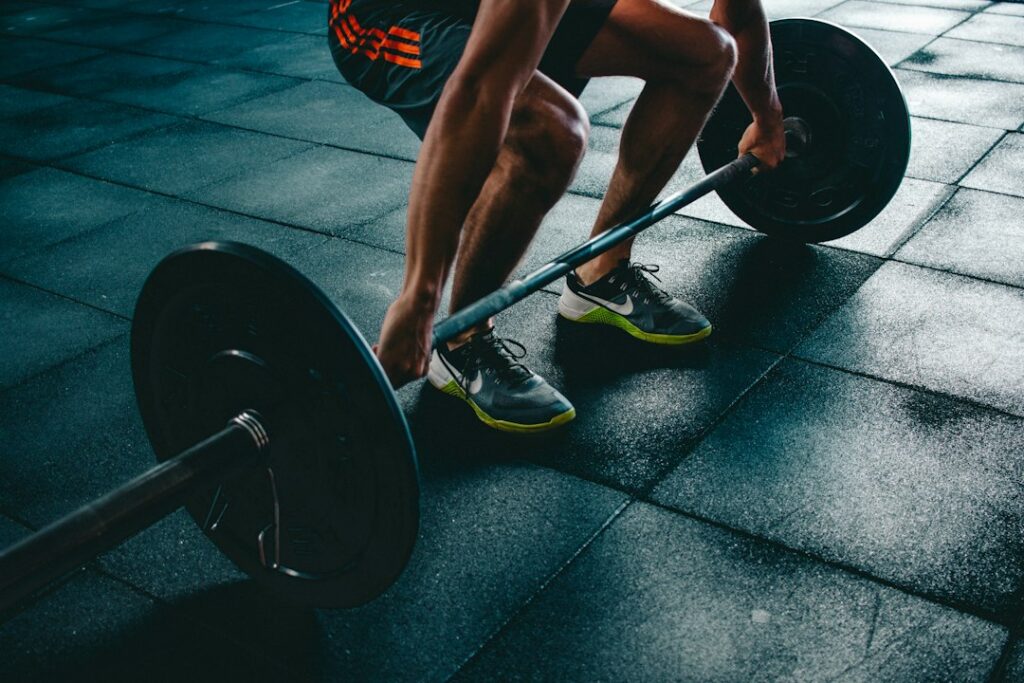
Start with movements that are easy to learn and adjust. Machines, dumbbells, resistance bands, and body-weight exercises can all build strength. Free-weight barbell movements may also be useful, but they require careful setup and technique.
A qualified exercise professional may be appropriate when a person is unsure how to perform a movement, is returning after an injury, or has a medical limitation that affects training. That is a safety consideration rather than a requirement for everyone.
How should a beginner warm up?
A warm-up can take 5 to 10 minutes and should prepare the body for the movements in the session. Light walking, cycling, or similar activity can raise body temperature, followed by several easier practice sets of the first exercises.
For example, before working sets of a pressing exercise, begin with an unloaded or very light set. Before a lower-body movement, perform a few controlled repetitions using body weight or a light load.
Long static stretching is not required before every workout. Gentle mobility work can be useful when a specific joint or movement feels restricted, but stretching should not create pain or replace gradual practice with the exercise itself.
What should beginners eat to build muscle?
Muscle growth requires adequate overall food intake, sufficient protein, resistance training, and recovery. A beginner does not necessarily need a large calorie surplus. Eating slightly more than usual may support growth, but aggressive weight gain can add unnecessary body fat.
Include a protein source at most meals, such as:
- Eggs, poultry, fish, or lean meat
- Milk, yogurt, or cottage cheese
- Beans, lentils, tofu, or other soy foods
- Nuts, seeds, and whole grains

Carbohydrates support training energy, while dietary fats help provide energy and support normal body functions. Fruits and vegetables contribute fiber, fluids, vitamins, and minerals.
A practical meal pattern might include protein, a carbohydrate source, vegetables or fruit, and a moderate amount of fat. Portion needs vary with body size, activity, goals, and appetite.
The warm climate in San Diego can make hydration especially relevant during outdoor activity and during workouts in spaces that become warm. Thirst is a useful signal, but longer or sweat-heavy sessions may require more deliberate fluid intake. Water is generally adequate for ordinary workouts; electrolyte products are not automatically necessary.
How much sleep and recovery are needed?
Most adults need about seven to nine hours of sleep, although individual requirements vary. Consistently poor sleep can reduce training quality, increase perceived effort, and make it harder to recover between sessions.
Recovery also includes lighter days, adequate food, and managing total weekly activity. Residents who walk frequently, cycle, surf, play recreational sports, or work physically demanding jobs may need to account for that activity when planning leg and back workouts.
Soreness is common during the first few weeks, especially after unfamiliar exercises. Severe soreness that limits normal movement, persistent joint pain, or a noticeable decline in strength calls for reducing training stress and assessing the cause.
How long does it take to see results?
Strength often improves within the first several weeks because the nervous system becomes more efficient at coordinating movement. Visible muscle gain usually takes longer and depends on training consistency, protein intake, sleep, genetics, age, and starting body composition.
Measure progress using several signals:
- Repetitions completed with the same weight
- Gradual increases in training loads
- Body measurements taken under similar conditions
- Progress photographs taken periodically
- How clothing fits
- Improved control and confidence during exercises
Daily scale changes are heavily influenced by water, food, sodium, and digestion. They do not provide a complete picture of muscle gain or fat loss.
What common bodybuilding mistakes should beginners avoid?
The most common mistake is changing the plan too often. A routine needs enough time to show whether it works. Other frequent problems include adding weight before learning technique, training hard every day, neglecting legs or back, and treating supplements as a substitute for regular meals.
Beginners should also be cautious with online transformation promises. Rapid changes may involve unusual starting conditions, intense dieting, favorable lighting, or training histories that are not visible. A sustainable plan should fit ordinary work, family, housing, and transportation routines.
Start with manageable sessions, progress gradually, eat consistently, and allow recovery. That approach works in a home setup, a shared residential space, or a local training facility without requiring an extreme lifestyle.